
Though today it seems to somehow be considered normal or acceptable behavior, I’ve long held the view that people who don’t keep their time commitments, those who are perpetually late—for no substantial reason—are irresponsible and inconsiderate. They do not respect others or their time, and worse: and they do not even respect themselves.
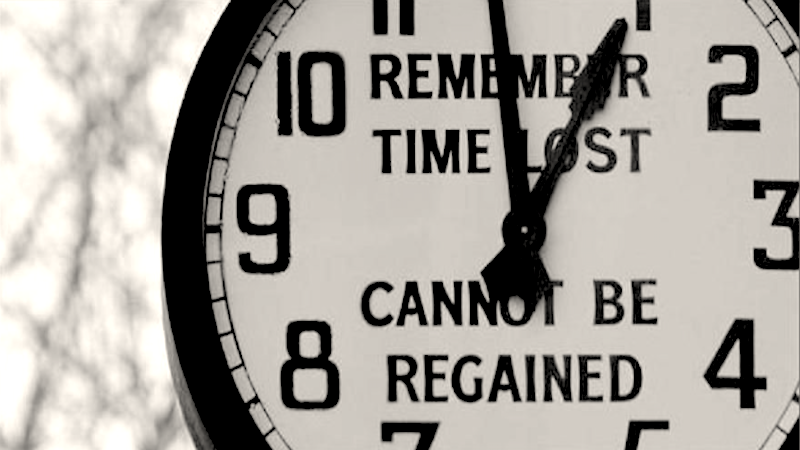
Time, like real estate, is valuable—primarily because there is a limited supply of both; there’s no way of producing any more of either.
In fact, time is even more valuable than real estate, because not only is our supply limited—but we also never know how much of it we actually have.
Time is one of the most important—if not the most important—resources to me; God knows I wasted enough of it the first half of my life; I’ve got a lot of catching up to do in the second half (assuming, of course, I even have a second half left…)
So it really aggravates me when others don’t respect my time, which essentially means that they don’t respect me—and, evidently, don’t respect themselves either, given that they’re willing to project such an irresponsible, inconsiderate image of themselves to others.
When we make a commitment to somebody, they not only reciprocate with a commitment to us, but there’s a ripple effect, as they arrange other aspects of their lives to accommodate that commitment—scheduling their other activities, making commitments to others, working the flexible parts of their daily routine into and around the rigid. So the reality is, they are planning to utilize the rest of their time based on, and structured around, our commitment to them.
So when we don’t honor that commitment, and they’re made to wait, then we’re essentially stealing their time, wasting their time, removing time from their limited supply which they can never recover. And if we’re excessively late, then they’ve got to start re-scheduling and re-committing their other activities and appointments, all because we didn’t keep ours. That, in turn, causes another ripple effect, as their friends and associates must then do the same, and on and on down the line. The negative consequences of our tardiness grows exponentially; the aggregate cost of this irresponsible, inconsiderate behavior, if tallied over the course of a year, would likely be staggering.
Sure, there are legitimate excuses: car broke down, accident, flat tire, illness, sick child, adverse weather conditions, an unforeseen emergency—you know, things that are beyond our control—and everyone understands this. It’s called life, and we all deal with it.
On the other hand, over-sleeping, running petty errands on the way, fielding unexpected phone calls, the failure to factor in appropriate time for traffic or other travel considerations, stopping for a quick bite, losing track of time, or simply blowing it off—all these types of things are not legitimate excuses; they’re cop-outs, petty excuses, and the perpetrator is simply being irresponsible and inconsiderate—or, to be blunt: rude and selfish. And merely phoning or texting ahead that they’re late but on their way doesn’t make it okay, either—short of relaying some aforementioned unforeseen and/or unavoidable problem or emergency.
Consider the words Benjamin Franklin:
“I have generally found that the man who is good at an excuse is good for nothing else.”
Also, in his article How Did it Get to be ‘OK’ for People to be Late for Everything?, successful businessman and author Greg Savage said something that really resonated with me, and he is exactly right:
“And it is not that we lead ‘busy lives’. That’s a given, we all do, and it’s a cop out to use that as an excuse. It’s simply that some people no longer even pretend that they think your time is as important as theirs. And technology makes it worse. It seems texting or emailing that you are late somehow means you are no longer late. Rubbish. You are rude. And inconsiderate.”
So when people are wasting my valuable (and limited) time, I have no problem walking away if it continues. I walk out of businesses. I walk out of waiting rooms. I end discussions with people who rudely pull their phone out and look at it in the middle of our conversation. One time I even walked out of a job interview…20 minutes after it was scheduled, the interviewer had not only not yet called me in, but didn’t even bother sticking their head out the door and apologizing, or explaining that they were running late and why. (Imagine what their reaction would be if I showed up for the interview 20 minutes late (or longer), without so much as an apology or explanation…think they’d hire me? The way I see it, when I attend a job interview, I’m interviewing them as much as they’re interviewing me. And in this case, I figured if they don’t respect their employees and their time any more that, then I’d rather not work there anyway, so I left. Oh, well…their loss…)
I simply have better things to do with my time than waste it, and I have commitments to other people (and myself) to keep. I can always take my business elsewhere, and if people in my life don’t respect me or my time, I don’t want or need them in my life anyway. We all understand the concept of eliminating “toxic” people from our lives; well, I believe that those who are indiscriminate with our time, who don’t respect us or themselves enough to honor their time commitments, fall within that category. If not toxic, then at least undependable. So whenever possible, those people should be distanced (if not completely eliminated) from our lives. Or at a minimum, relegated to a position in which we are no longer dependent upon them for anything important.
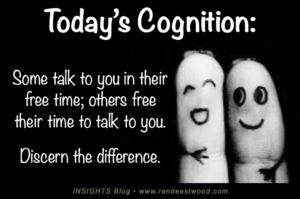
This thought brings to mind a Today’s Cognition graphic that I created in the past, conveying how we can choose to allocate our valuable time:
And further: being punctual isn’t just a rule or expectation; as the article The Man is Punctual: The Importance of Being on Time, published over at The Art of Manliness explains, there are other benefits to punctuality as well: it builds and displays our integrity; demonstrates that we are dependable; builds our own self-confidence; assures our peak performance; strengthens and displays our discipline; reveals our humility; and most importantly: demonstrates our respect for others and their time.
In Summary
So please, try not to be a “time thief.” Be considerate and respectful of others and their time, as well as yourself your time.
And if you suddenly realize that you have, in fact, often been a “time thief” in the past—perhaps you simply had no idea how such behavior could be negatively impacting others—then maybe you should consider changing your approach, improving your behavior, start conducting yourself in a respectful manner, both toward yourself and your time, as well as toward others and their time: make a more diligent effort to keep your word, honor your commitments, and be punctual whenever possible. And perhaps by doing so, you’ll get yourself back into people’s good graces—while you still have time…
Subscribe to INSIGHTS Blog on Substack • Like/Follow INSIGHTS Blog on Facebook
Visit Lifeology Store • Like/Follow Lifeology Store on Facebook • View Rand’s Books on Amazon
A Note To Readers:
If you found this article (or any of the others, for that matter) interesting, informative, entertaining, etc., please consider subscribing to the INSIGHTS email newsletter: simply enter your email into the form below (also in the right sidebar)—or, if you prefer, just use this simple quick sign-up form. (Bonus: INSIGHTS subscribers receive a 20% discount at Lifeology Store, at checkout simply enter the discount code included in the welcome email upon subscribing!)
↓↓↓ Also, please hit the “Like” (thumbs up) button below. Thanks! ~ Rand